Weather is one of the few factors crews cannot control.
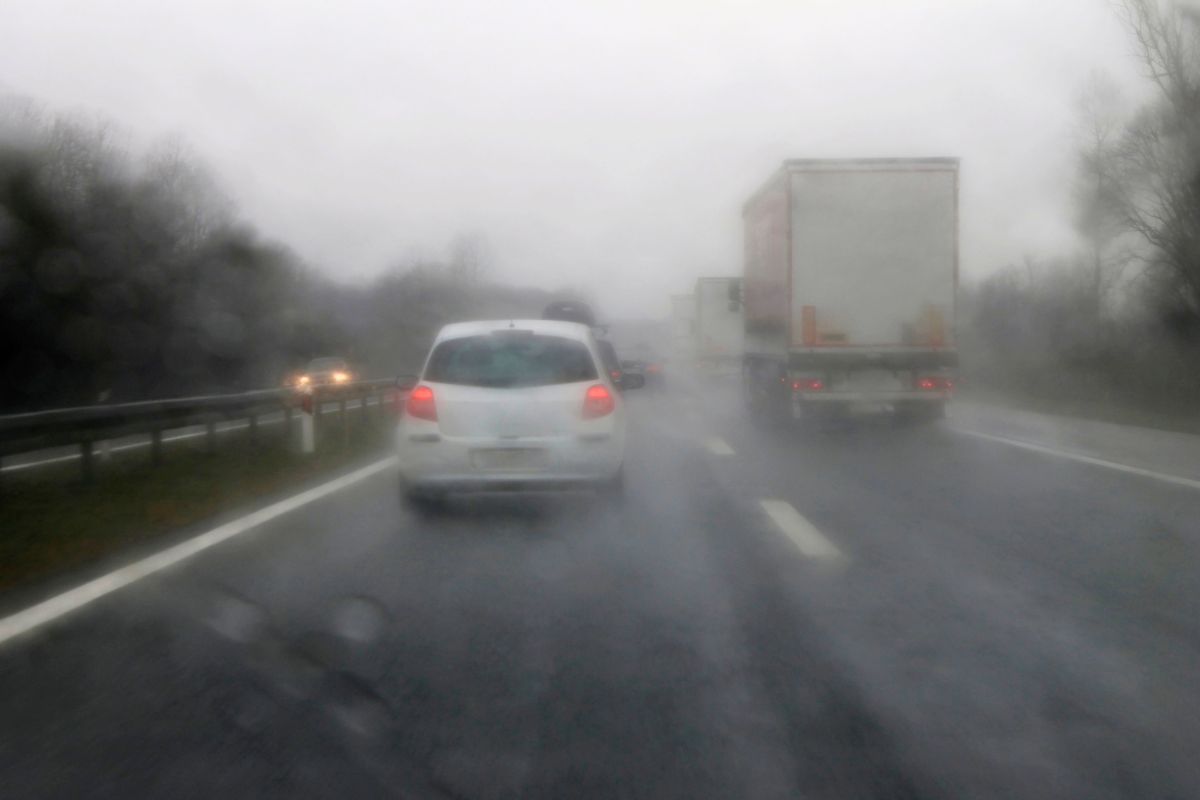
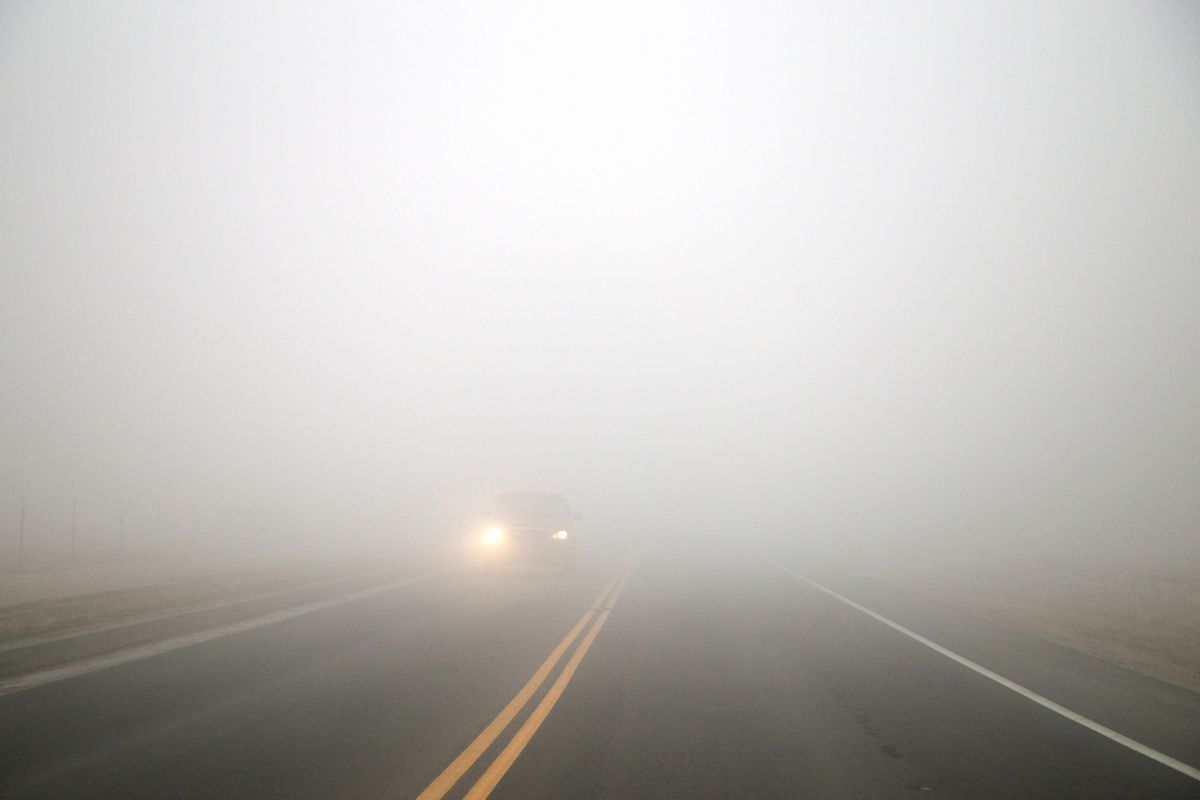
A traffic management plan might look perfect on paper but conditions can change quickly. Rain rolls in. Fog settles over a worksite. The sun drops earlier than expected. Suddenly visibility is reduced and drivers have less time to react.
As we head into winter, these challenges become more common across Australia. While every season brings its own considerations, winter places greater emphasis on visibility and equipment reliability.
The good news is that the right traffic management equipment can help keep workers and road users seen and safe no matter what the weather is doing.
How weather conditions affect road users
Weather changes more than road conditions. It changes how people drive, how quickly they react, and how clearly they can understand what is happening around them. It also impacts crews on site.
Condition
What changes on the road
Practical traffic management response
Rain
Wet roads increase stopping distances and signage becomes harder to see through spray and glare
Check visibility after snowfall, frost or road clearing activity
Extreme heat
Heat can increase fatigue, dehydration and glare for workers and drivers. Equipment, signs and road surfaces can also become hot to handle.
Use shaded rest areas, rotate crews where possible, keep hydration front of mind and check whether glare is affecting sign visibility.
Position equipment carefully and review handling risks on hot surfaces.
Winter brings additional challenges for traffic management
While weather affects traffic management year round, winter often combines several challenges at once.
Shorter daylight hours
Increased rainfall
More frequent fog
Longer periods of low light
Reduced visibility during peak travel times
Rather than creating entirely new hazards, winter amplifies existing ones. Drivers have less time to identify hazards, changing traffic conditions and temporary traffic management layouts.
This places greater reliance on traffic control equipment that remains visible and effective when conditions are less than ideal.
Safe traffic management in poor weather is not just about reacting once conditions change. A bit of planning can make a big difference on site.
Before bad weather sets in, crews should consider:
Checking the forecast before and during the shift
Reviewing whether signs and devices are visible in the conditions
Ensuring signs, stands and temporary devices are properly weighted
Having wet weather PPE, shelter or vehicle access available for workers
Preparing a clear plan for storms, lightning or unsafe conditions
Checking equipment after weather changes, not just during the initial setup
When the weather turns, the safest sites are usually the ones that have already thought through what could change.
Staying seen and safe
Weather will always influence how traffic management sites operate.
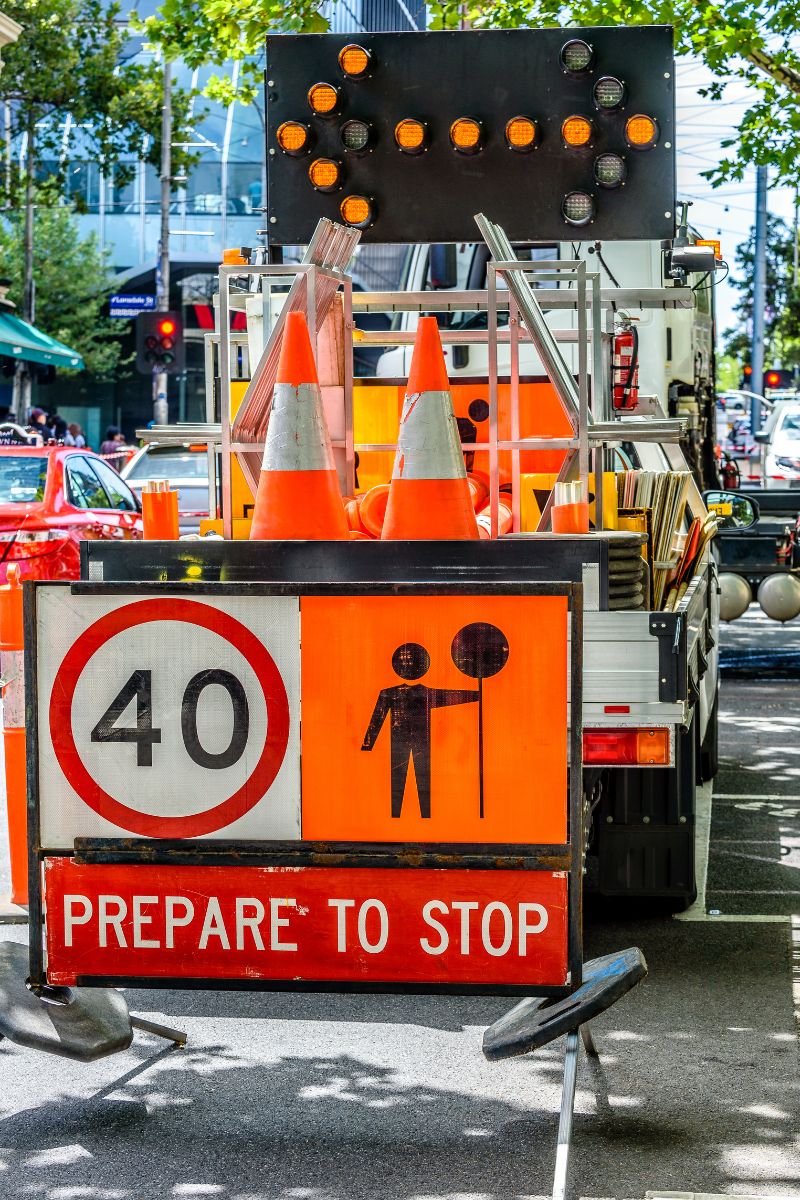
From reflective signage helping drivers navigate through fading light to guideposts defining road corridors in challenging conditions, every element plays a role in improving visibility and road safety.
As winter approaches, it is worth reviewing the equipment, signage and systems in place to ensure they are ready for the conditions ahead.
Because no matter what the weather is doing, the goal remains the same.
Guide posts for roadworks do a quiet but important job. They define the road edge and help drivers navigate through unfamiliar conditions while keeping crews safe. During roadworks, especially, the right guide post can mean the difference between a driver feeling confident and one who isn’t quite sure where the road ends.
Across Australia, road conditions vary significantly. Busy regional highways and alpine environments that see genuine snowfall both demand something a little different from the same product. Getting the right post sorted early in the planning process means fewer headaches down the track and better outcomes for everyone, from the construction crew to the commuter who drives through at midnight.
Why guide posts matter in roadworks
When roadworks change a familiar route, drivers lose their usual reference points. Shifted lanes and temporary conditions create real uncertainty, particularly where lighting is limited or the layout feels unfamiliar. Guide posts bring back that sense of clarity. They tell drivers where the road is going, even when everything else looks a bit different.
On rural roads, this becomes even more critical. There are no street lights and often no second chances if a driver misjudges the edge. A well placed, clearly visible guide post in heavy rain or on a moonless night can prevent an accident. They also help maintenance teams locate infrastructure quickly, which reduces disruption and keeps projects running efficiently.
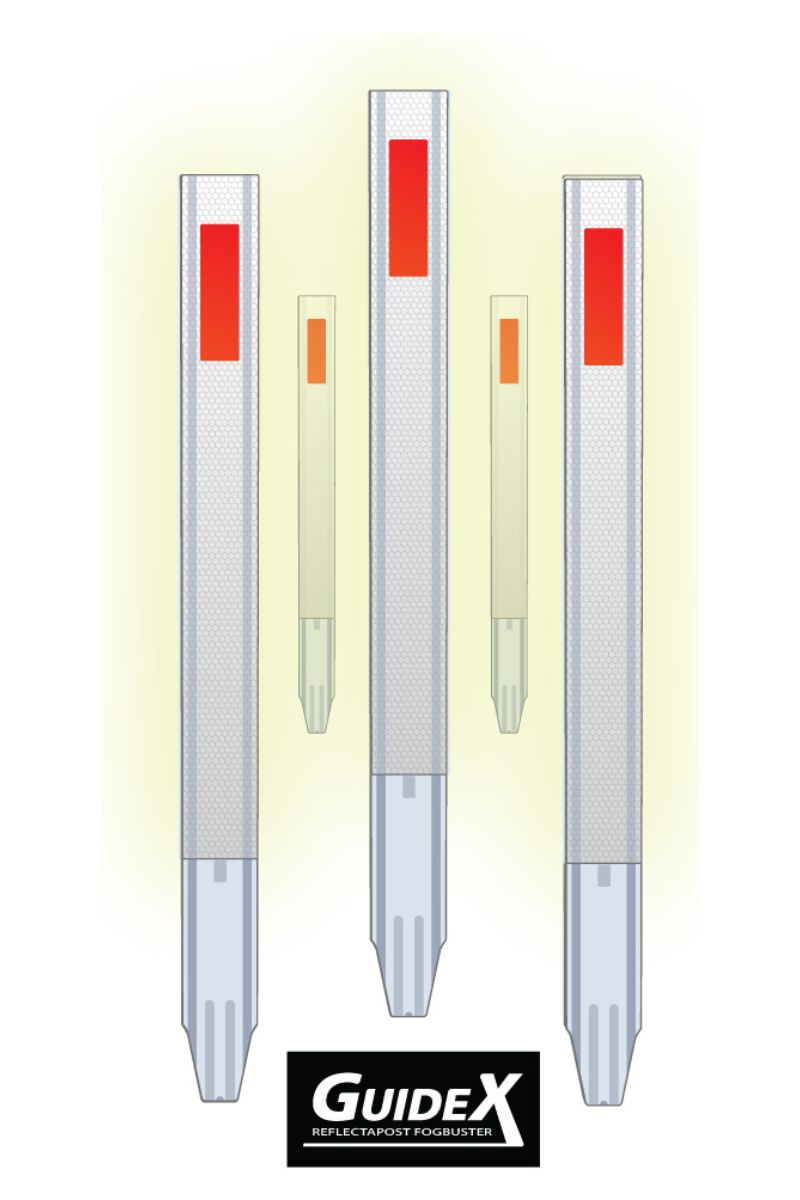
GuideX FogBUSTER
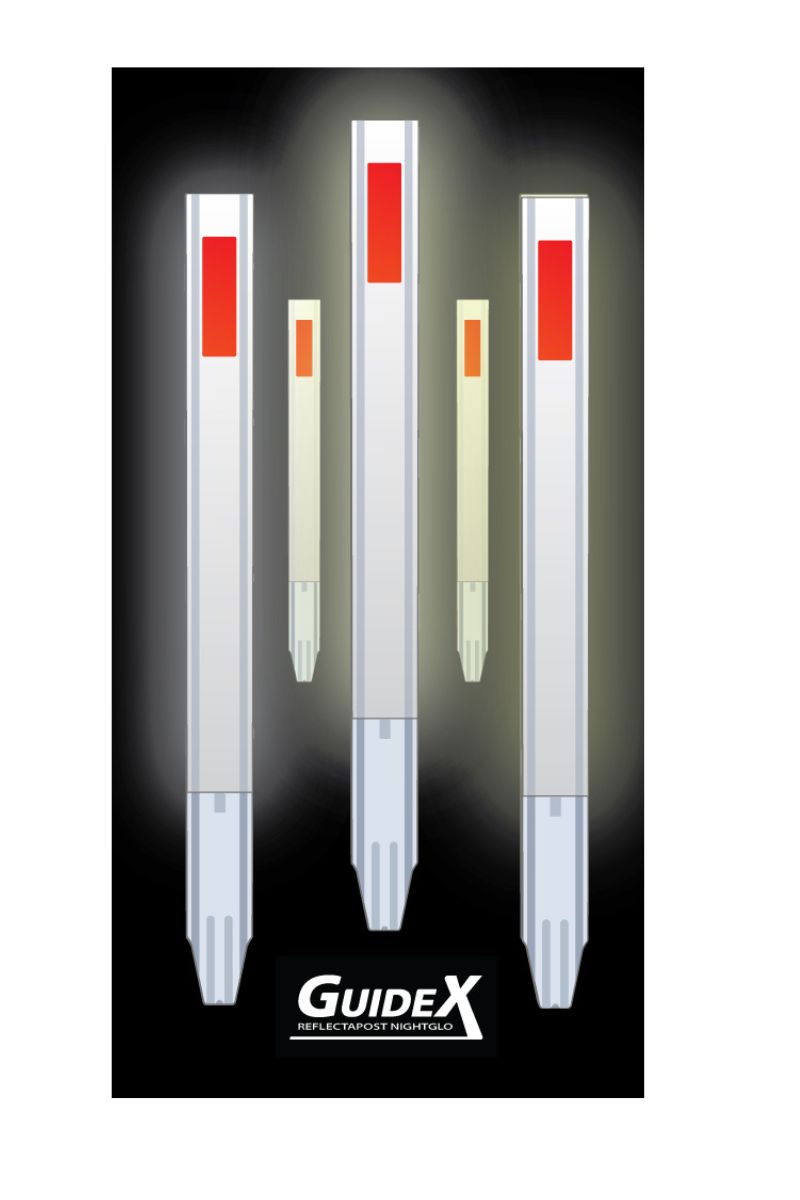
GuideX NightGLO
Manufactured in house for consistent quality
There is a meaningful difference between guide posts that are manufactured in house and those that are not. In house production gives manufacturers direct control over materials and quality, which means posts can be built to actually suit Australian conditions rather than simply meeting a minimum standard on paper.
It also creates room to adapt. Some sites need posts that are taller or mounted differently based on terrain or that have greater visibility for low light or snowy conditions. Having that flexibility means the final product is genuinely fit for purpose. And when a project is running to a tight deadline, reliable lead times matter just as much as the product itself.
Features across our range of guide posts for roadworks
With every product manufactured in house, the Tranex guide post range is built to perform across the full range of Australian conditions.
Anti-wind design built to stay in place
High-gloss, self-cleaning surface that resists dust and moss build-up, reducing maintenance over the life of the post
UV stabilised, which holds up against the intensity of the Australian sun
Available in uPVC and steel to suit the installation environment and project specification
High tensile strength that allows the post to be easily driven into the hardest road base using the unique Guidepost Slammer Tool
Purpose-built options across the range for work zones, service marking and asset identification
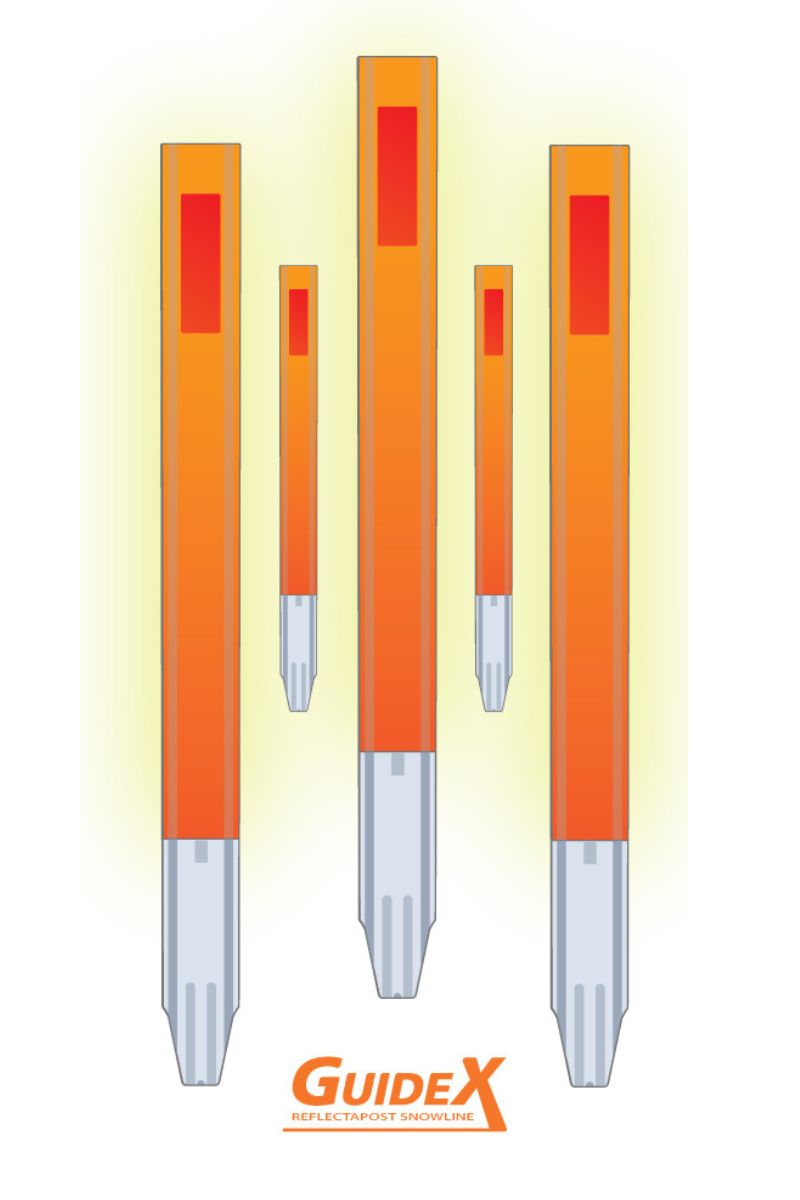
GuideX SnowLINE
Planning for winter and snow conditions
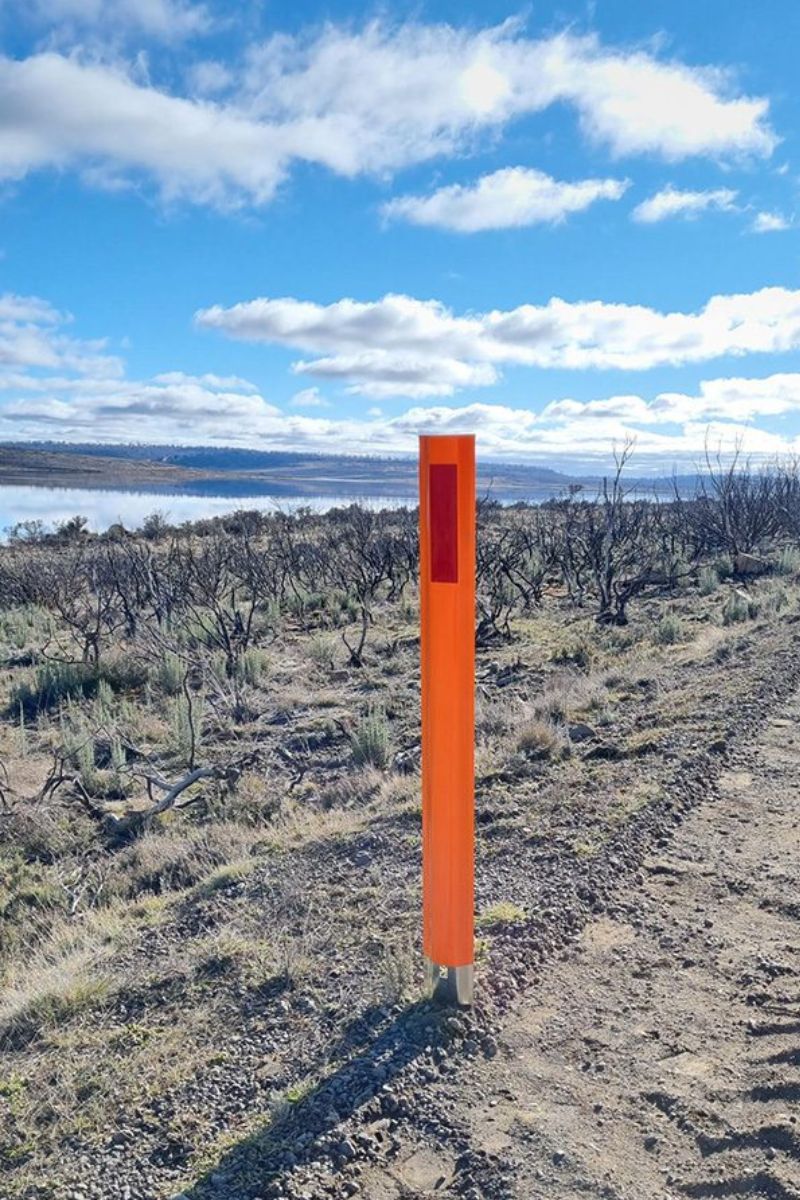
Alpine roads and colder climates present their own challenges. Snow can obscure a standard post entirely, and when you combine that with shortened daylight hours, navigation on a regional road becomes genuinely difficult.
This is exactly the problem our SnowLINE guide post was designed to solve. Built specifically for snowy areas, it delivers up to 20 times the visibility of standard markers through fully reflectorised fluorescent orange sheeting across the entire surface. The mistake many project teams make is treating winter conditions as something to sort out later. Factor it in at the beginning and the road stays clearly defined all year round.
Compliance with Australian Standards
Australian Standards exist for good reason. They create consistency across the network so that roads feel predictable and readable for drivers everywhere. When guide posts meet reflectivity and durability requirements, they hold up over time regardless of weather or wear. And most importantly, they exist to keep both drivers and crews seen and safe.
Planning for compliance from the start avoids the frustration of replacing non compliant products mid project. It keeps things moving and reduces the kind of unexpected costs that nobody budgets for but everyone ends up dealing with.
Getting it right from the start
Guide posts support safety and consistency across an enormous range of conditions. Choosing the right solution means drivers can read the road clearly and infrastructure teams can do their work without unnecessary complications or safety risks.
That kind of outcome does not happen by accident. Tranex has spent over 40 years working alongside independent contractors, local governments and civil construction teams across Australia and New Zealand. That experience shapes how every product is made and what it is made to do. It also means the team understands what compliance actually looks like in practice, not just on paper, because every product aligns with national codes and state and territory regulations. Quality is backed by ISO 9001 certification, which sets a clear benchmark for durability and effectiveness. These are not credentials collected for appearances. They reflect a genuine commitment to doing things properly.
Guide posts for roadworks are a small part of the picture that carries a lot of weight. Working with a supplier who understands Australian conditions, meets the relevant standards and has the experience to back it up makes that part of the job a lot simpler.
When you’re installing signage on a 100km/h road, you’re not just putting a post in the ground. You’re placing infrastructure into a high-speed, high-risk environment, and that includes the support structure beneath the sign itself.
Frangible sign structures are designed specifically for these conditions. At Tranex, we work alongside contractors, councils and state government departments delivering signage into regional highways and state-managed corridors, where the safety conditions are different. Traffic moves faster, heavy vehicles are common, and the consequences of roadside impact are more severe.
Frangible supports may not look any different to drivers, but they play an important role in how roadside infrastructure behaves if a collision occurs.
In this blog, we’ll explore why frangible sign posts are critical on high-speed roads and where they’re most commonly used.
What are frangible sign structures?
A frangible sign structure is designed to break away in a controlled manner if struck by a vehicle.
Instead of behaving like a rigid obstacle, the support system is engineered to reduce the force transferred during impact. It’s part of a broader road safety approach, one that considers not just visibility and compliance, but what happens in a worst-case scenario.
The goal isn’t to eliminate risk but rather reduce impact severity where possible. On high-speed roads, that matters.
Why frangible sign supports are critical on 100km/h roads
Speed changes everything. At 100km/h, the impact involved in a collision is significantly greater and drivers have less time to correct mistakes. On state highways and regional freight corridors, vehicles move quickly and often over long distances. Heavy transport is part of daily traffic flow, and factors like wildlife or fatigue are real considerations.
In these environments, roadside infrastructure plays a critical role in overall safety outcomes. If a vehicle leaves the carriageway at 100km/h, rigid posts can increase injury severity and damage to the vehicle. Frangible systems are designed to respond differently to reduce overall impact.
MASH-approved frangible sign structures: what it means
MASH stands for Manual for Assessing Safety Hardware. It’s the recognised testing standard used to assess how roadside safety hardware performs during vehicle impact.
In practical terms, MASH testing evaluates how a structure behaves when struck at speed, including vehicle stability and occupant risk.
For frangible sign structures, MASH approval provides confidence that the system has been independently tested under high-speed conditions. That’s why it’s commonly required, or strongly expected on:
State road projects
Major transport corridors
100km/h regional highways
Government infrastructure programs
Where frangible sign structures are typically used
You’ll most often see frangible supports used for:
Large directional guide signs
Advance warning signage
Permanent wayfinding on high-speed roads
Long-term roadside infrastructure
Think of a regional highway connecting growing communities. Or a freight route carrying B-doubles day and night. Or a major arterial undergoing safety upgrades. In these environments, signage needs to do more than stand upright. It needs to be designed with impact safety in mind.
Built for Real Road Conditions
High-speed corridors aren’t forgiving. They face open wind exposure, coastal air and salt corrosion, long maintenance intervals, and continuous vibration from heavy traffic.
Frangible sign structures are designed to operate in these environments while still performing safely in an impact scenario.
That balance is important.
Frangible signals are strong enough to endure the elements and engineered to respond differently when struck.
Supporting safer outcomes on state roads
Road safety strategy has evolved. Of course, the ultimate goal is always to prevent crashes, but we also want to reduce harm when crashes do occur.
Frangible sign supports sit within that broader passive safety framework. They don’t change how a sign looks. They don’t change the message drivers read. But they do change how the roadside infrastructure behaves if something goes wrong.
On 100km/h roads, that’s not a small detail. It’s part of responsible infrastructure planning.
If you’re reviewing roadside infrastructure on high-speed corridors or planning future upgrades, the Tranex team can support you with compliant frangible sign support solutions aligned to state road requirements. Contact us today.
Following safety signage best practices helps to ensure signs are clear, visible, and easy to understand in everyday use. When signage is done well, it supports safer behaviour without needing constant reminders or intervention.
With over 40 years of experience supplying road and safety signage across Australia and New Zealand, the team at Tranex has a strong understanding of safety standards and what it takes for signage to keep people seen and safe in real conditions. In this post, we will break it all down, sharing our top tips for effective safety sign usage, from design to placement.
10 safety signage best practices to follow
Let’s dive into the best practices every crew should follow.
1. Choose the correct type of safety signage
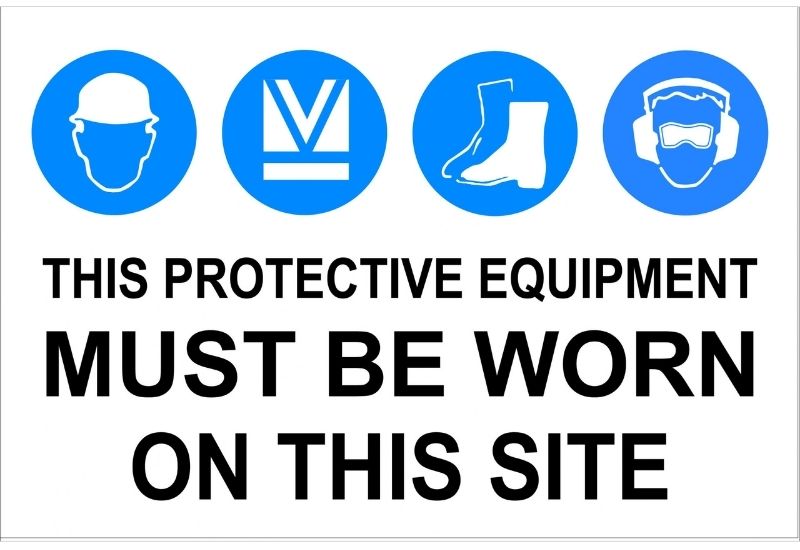
Different safety signs are designed to communicate different messages. Mandatory signs instruct people on what must be done, warning signs highlight hazards, prohibition signs indicate what is not allowed, and information signs provide guidance.
Safety signage should be understood quickly, often in situations where people are distracted or moving.
Short, direct wording is more effective than long explanations. Supporting text with clear symbols also helps ensure the message is understood by visitors, contractors, or members of the public who may not be familiar with the site.
3. Use recognised colours and symbols consistently
Recognised colours and symbols help people understand the level of risk without reading the sign in full.
For example, consistent use of warning colours across a site helps hazards stand out, while standard shapes and symbols reinforce meaning over time. Consistency is especially important on larger sites or across multiple locations.
4. Make sure signage is visible and easy to read
Visibility depends on more than just the size of the sign. Font size should match the viewing distance, contrast should allow the sign to stand out from its surroundings, and lighting should be considered in low-light or night-time conditions. Outdoor signage also needs to account for weather, dust, and glare.
5. Place signage where decisions are made
Signage should be positioned before a hazard is reached. This might include placing warning signs ahead of a sharp bend, installing pedestrian guidance signage before a crossing point, or displaying mandatory PPE signage at site entry points. The goal is to give people time to adjust their behaviour safely.
6. Avoid overcrowding and visual clutter
Too many signs in one area can make it difficult to identify what’s most important.
Where multiple messages are required, prioritise the most critical information and remove signs that are no longer relevant. Clear spacing and logical grouping also help signage remain effective.
7. Keep signage relevant to the environment
Signage should reflect what’s happening on site at that moment. If traffic patterns change, works move to a new area, or access points are relocated, signage should be reviewed. Temporary signage should be removed when no longer needed to avoid confusion or complacency.
8. Inspect and maintain signage regularly
Regular inspections help identify signs that are fading, damaged, or obstructed.
For example, vegetation growth, parked vehicles, or temporary structures can block signage over time. Routine checks ensure signage remains visible and continues to communicate accurately.
9. Choose materials suited to the conditions
High-traffic areas, roadside locations, and public spaces may require more durable or vandal-resistant materials. Selecting materials designed for the conditions helps signage last longer and reduces the need for frequent replacement.
10. Ensure signage meets Australian standards
Compliance underpins effective safety signage. Signage should align with relevant Australian Standards and state and territory regulations to ensure legal compliance. This is particularly important for road, construction, and public-facing environments.
Final thoughts
Safety signage best practices are built on clarity, consistency, and attention to detail. When signage is designed for its environment, placed thoughtfully, and maintained over time, it becomes a reliable part of everyday safety.
Applying these best practices helps crews reduce risk, improve compliance, and create safer spaces for workers, visitors, and the wider community.
Need help reviewing or improving your safety signage?
If you’re unsure whether your current signage is doing its job, a fresh set of eyes can make a big difference. From reviewing existing signage and identifying gaps to recommending signage solutions suited to your environment, the team at Tranex can help. Get in touch today.
Clear, visible safety signage plays a critical role in keeping people informed, compliant, and protected. Across worksites and public environments, hazards can change quickly, and generic signage doesn’t always communicate the right message at the right time.
That’s where custom safety signs come in. Designed for specific locations, risks, and audiences, they help reduce confusion, improve awareness, and support safer outcomes in both controlled and high-traffic environments.
With over 40 years of experience, we’ve been producing superior road and safety signage in-house for Australian civil contractors, councils, and traffic control crews. In this blog, we’ll step you through everything you need to know about custom safety signage solutions.
Why custom safety signs are essential for worksites and public spaces
Every site presents different safety challenges. A construction zone, school entrance, council facility, or public car park all require signage that reflects how people move, behave, and interact within that space.
Custom safety signs allow organisations to:
Address site-specific risks rather than relying on generic warnings
Communicate specific instructions and directions clearly to workers, visitors, and the public
Adapt signage as conditions, layouts, or regulations change
Improve visibility in busy, noisy, or high-risk environments
Where custom safety signs are commonly used
Because they’re adaptable, custom safety signage is widely used across both temporary and permanent environments, including:
Construction and civil worksites
Schools and education facilities
Councils and local government infrastructure
Manufacturing and industrial facilities
Car parks and transport areas
Community facilities and public buildings
Events and temporary public spaces
Mining sites
Designing effective custom safety signs
An effective safety sign communicates its message clearly without requiring people to pause and interpret what it means.
In busy worksites and public spaces, signage often competes with movement, noise, and visual distractions. Strong design focuses on clarity and context rather than decoration, ensuring the message is understood at a glance.
Clear language that’s easy to understand
The wording on a safety sign should be simple, direct, and familiar. Clear language reduces the time it takes to process information, which is especially important in environments where people are moving quickly or managing multiple tasks.
For example, a sign that states “Authorised access only” is more immediately understood than one using longer, less direct wording
Visibility through colour and contrast
Colour contrast plays a major role in whether a sign is noticed. High contrast between text, symbols, and background improves legibility from a distance and in varying light conditions.
On worksites, bold black text on a yellow background is commonly used to highlight hazards, while red elements are often reserved for warnings or prohibited actions. In public spaces, contrast helps signage stand out against landscaping, buildings, or surrounding signage without becoming visually overwhelming.
Using familiar symbols for fast recognition
Symbols support instant recognition and can often communicate meaning faster than words alone. Using well-known safety icons alongside text helps reinforce the message and supports understanding across different audiences, including visitors or members of the public who may not be familiar with the space.
Correct sizing and placement on site
Even the best-designed sign can be ineffective if it’s poorly positioned. Size and placement should reflect how the sign will be approached and viewed.
A warning sign positioned too high above eye level may go unnoticed, while one placed too far from the hazard may be seen too late.
For example, placing a speed limit sign at the entry to a car park, rather than deep inside it, ensures drivers receive the message at the point where behaviour needs to change.
Materials suited to the environment
Material selection has a direct impact on how well a safety sign performs over time. Outdoor safety signs need to withstand exposure to sunlight, rain, wind, and temperature changes. Materials such as aluminium composite panels or UV-stable plastics are commonly used outdoors.
Indoor safety signs face different demands. In public buildings and workplaces, materials like rigid PVC or acrylic are often used for their clean finish and durability in high-traffic areas. These materials hold colour well, resist scuffing, and are easy to clean, making them suitable for environments where signs may be touched or brushed past regularly.
For temporary works or short-term changes, lightweight materials can be used to allow signs to be moved or updated as conditions change. Permanent installations, by contrast, benefit from more robust materials that maintain clarity and structure over time.
Compliance and safety standards in Australia
Safety signage supports workplace and public safety obligations across Australia, but requirements can vary depending on the environment. It’s important to check that signage aligns with relevant standards and accurately reflects site conditions.
Working with a trusted sign provider can help ensure safety signs are designed and installed with compliance in mind, from clear messaging and correct use of symbols to appropriate materials and placement. This approach supports safer outcomes while keeping safety communication clear and practical.
The final word
Well-designed safety signage supports clearer communication, safer behaviour, and more confident movement through worksites and public spaces. When signs are tailored to their environment, they’re easier to notice, easier to understand, and more effective over time.
At Tranex, custom safety signs are designed and manufactured in-house with real-world conditions in mind, helping organisations create safer, more functional spaces without unnecessary complexity.
If your signage needs to work harder on site, a considered, custom approach makes all the difference.
Get in touch today to discuss your specific signage requirements.
5 common mistakes when buying traffic management equipment (and how to avoid them)
When you’re sourcing traffic management equipment, the stakes are higher than most people realise. After years of working alongside contractors, councils, and traffic crews across Australia, one thing is clear: the gear isn’t just inconvenient. It can stall worksites, create compliance issues, increase risk, and cost your team more long-term.
Across the industry, we’ve seen the same problems come up again and again, often caused by cheap imports, lookalike products, or equipment that simply isn’t built for Australian conditions. With so many options on the market, it’s easy to make the wrong call without realising it.
Here are the five most common mistakes we see when people buy traffic management equipment, and simple ways to avoid them.
1. Choosing equipment that doesn’t meet Australian standards
A lot of equipment looks the part, but that doesn’t mean it’s compliant. Cheap imports often fail to meet Australian standards or state-based requirements, and that can have serious consequences. Non-compliant equipment may be rejected during audits, create safety hazards, or put your team at risk of fines and delays.
Reflective classes, UV stability, height requirements, and material quality all vary widely between products. Something as small as the wrong grade of reflective sheeting can make a setup unsafe at night.
How to avoid it: Always check for AS1742.14 compliance and ask suppliers for documentation that proves it. Working with a trusted supplier, one who understands the standards inside out, removes any confusion and keeps your site protected.
2. Prioritising price over long-term durability
Price matters, but buying the cheapest option usually costs more in the long run. Low-grade plastics fade fast under the Australian sun. Thin bases crack. Handles loosen. Reflective strips peel. Before you know it, you’re replacing equipment every few months.
High-quality, durable equipment exists for a reason: it lasts longer, performs better, and costs less over the lifetime of the project. In high-demand works (particularly over the summer period), durability isn’t a ‘nice to have’. It’s non-negotiable.
How to avoid it: Look for UV-resistant materials, long-life components, and equipment that has been tested on real worksites.
Stronger materials, reinforced bases, heavy-duty welds, and better reflectivity all mean fewer replacements and safer operations. Think about cost per year of use, not just the upfront price tag.
Look for ISO 9001 certification that ensures manufactured products meet the highest quality benchmarks, guaranteeing durability and effectiveness.
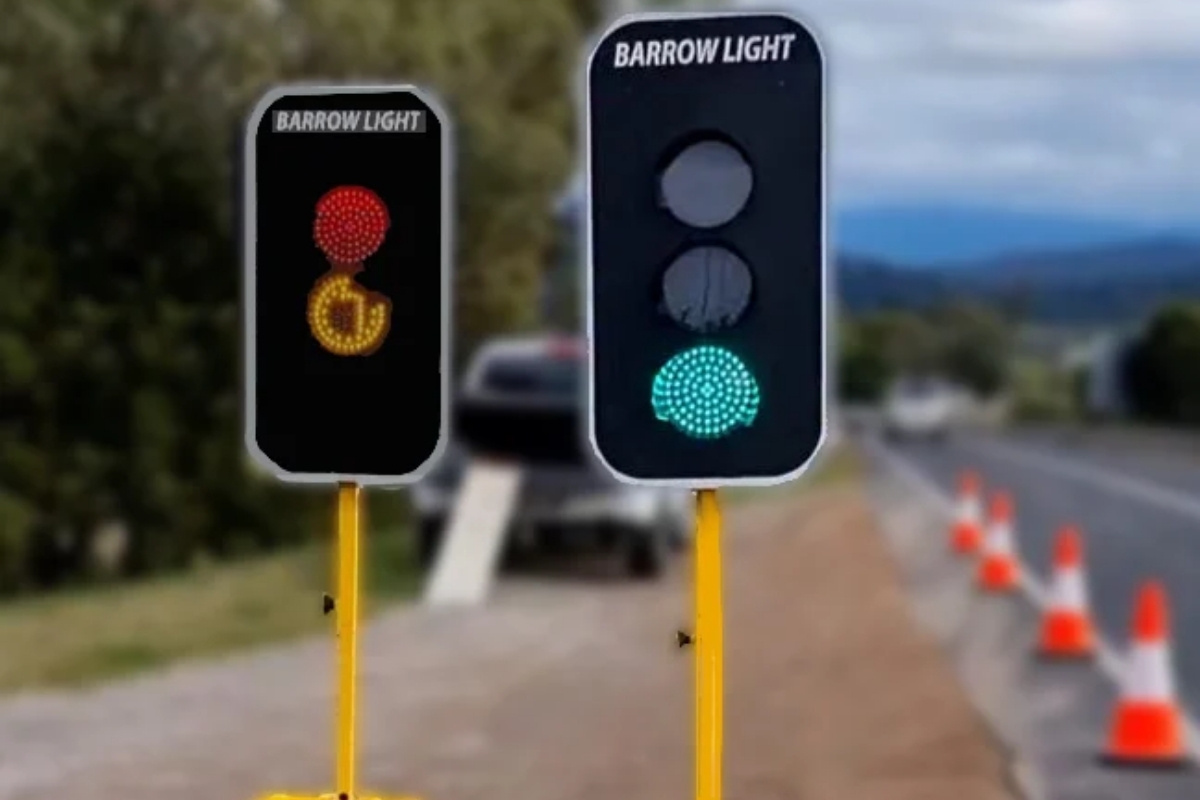
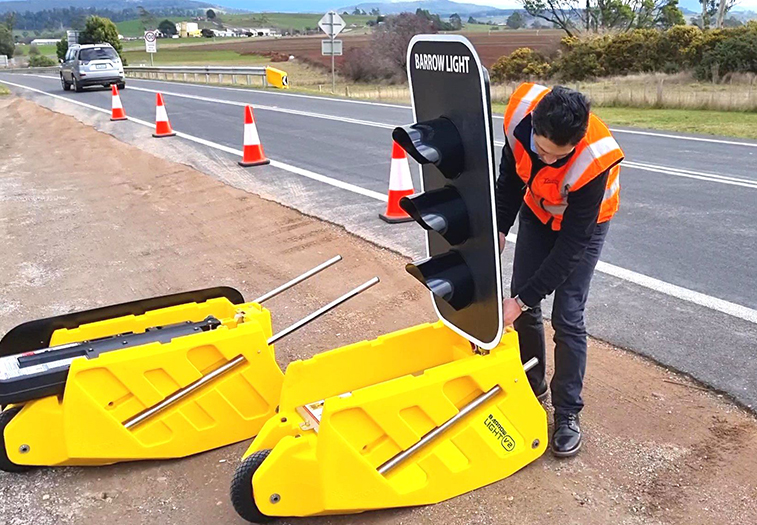
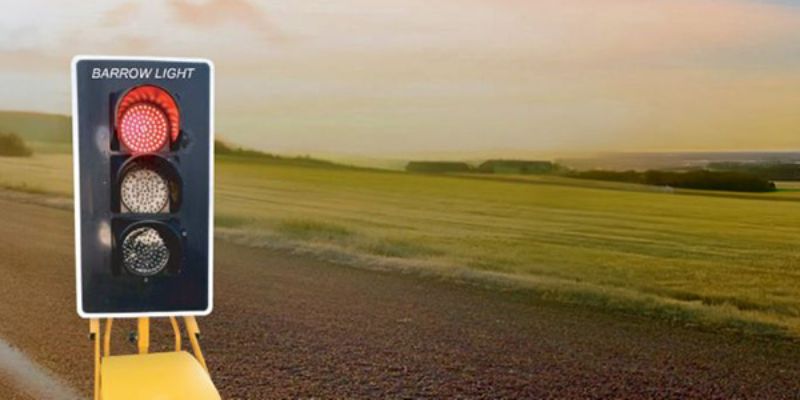
Take the Barrowlight, for instance. The portable traffic light is engineered for long-term use with a strong, stable frame (while still being lightweight for crews) and high-quality lighting components that stand up to repeated night works. It’s equipment that lasts seasons, not shifts.
3. Buying equipment that isn’t fit for purpose
Not every job is the same, and not every product suits every environment. Using equipment that isn’t built for high-traffic conditions, choosing cones that are too short for visibility requirements, or selecting reflective materials that fail after a few nights of rain can all undermine your traffic setup.
Common issues include mismatched frames, incompatible bases, insufficient night visibility, or gear that can’t handle high winds or ongoing works.
How to avoid it: Start with the conditions your team will face.
Consider:
The amount of traffic
Day vs night works
Required visibility
Weather exposure
Site duration
Local authority requirements
Fit-for-purpose equipment keeps your team safe and ensures your setup stands up to real-world conditions.
For example, if you’re running smaller crews or need a fast, single-operator setup, standalone solutions like SafetySAM can reduce manual handling and remove the need for two-person lifts while ensuring high visibility on busy roads.
Lightweight portable traffic lights such as theBarrowlight also suits teams that need quick redeployment or work across multiple shift changes.
4. Overlooking storage, transport, and handling needs
It’s easy to focus on what equipment does on-site and overlook the work that happens before and after. Equipment that’s too heavy, awkward, or brittle makes transport and handling harder than it needs to be. This slows crews down and increases the risk of damage or injury.
Poor storage planning is another common issue. Stacked incorrectly, even good-quality gear becomes warped, bent, or cracked long before its expected lifespan.
How to avoid it: Choose equipment that stacks efficiently, is easy to load and unload, and holds up during regular transport. Consider things like:
Cone trolleys, dollies, or purpose-built storage solutions
Well-designed gear pays for itself in fewer replacements, faster setups, and reduced strain on your team.
5. Not considering lead times or supplier reliability
Even the best equipment isn’t helpful if it doesn’t arrive on time. Projects stall, crews stand around, and last-minute scrambling becomes the norm. Some suppliers offer low prices because they don’t keep stock on hand, leaving customers waiting weeks or months.
Unreliable supply also leads to mismatched equipment across jobs. That affects consistency, visibility, and compliance.
How to avoid it: Look for local suppliers with strong stock levels, transparent lead times, and a track record of delivering when they say they will.
Local manufacturing partnerships and in-house fabrication are good signs that a supplier can support you when timelines tighten.
Reliable suppliers also provide after-sales support, fast responses to queries, replacements, and advice – all essential when managing multiple sites.
Final thoughts: Buying traffic management equipment
Traffic management equipment is one of those areas where cutting corners always ends up costing more.
The right gear keeps crews safe, satisfies compliance requirements, reduces downtime, and stands up to long-term use in tough Australian conditions. By avoiding these common mistakes and choosing a trusted supplier, you set your project up for smoother operations from day one.
If you need durable, compliant traffic management equipment designed for Australian worksites, the Tranex team can help you choose the right setup for every job.
When you are running a worksite, you do not have time to mess around with complicated gear. You need signs that do the job quickly, are easy to move, and are built tough enough to handle the elements.
At TranEx, we have been supplying traffic management equipment across Australia and New Zealand, working with councils, contractors, and hire companies to keep people and projects safe. Over that time, we have seen how the right signage can make or break site safety, and how new solutions are helping crews work faster and with less risk.
That is where stand alone traffic control signs come in. They are the simple, sturdy solution for anyone managing traffic, pedestrians, or roadworks.
What are stand alone traffic control signs?
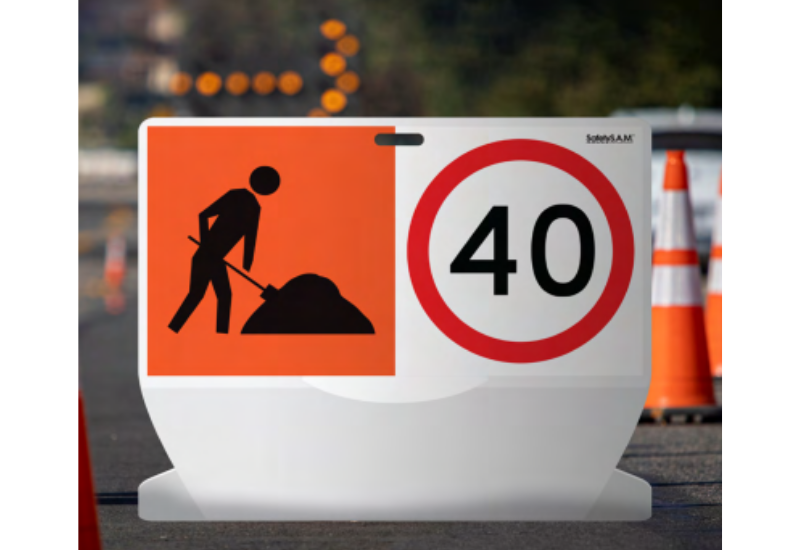
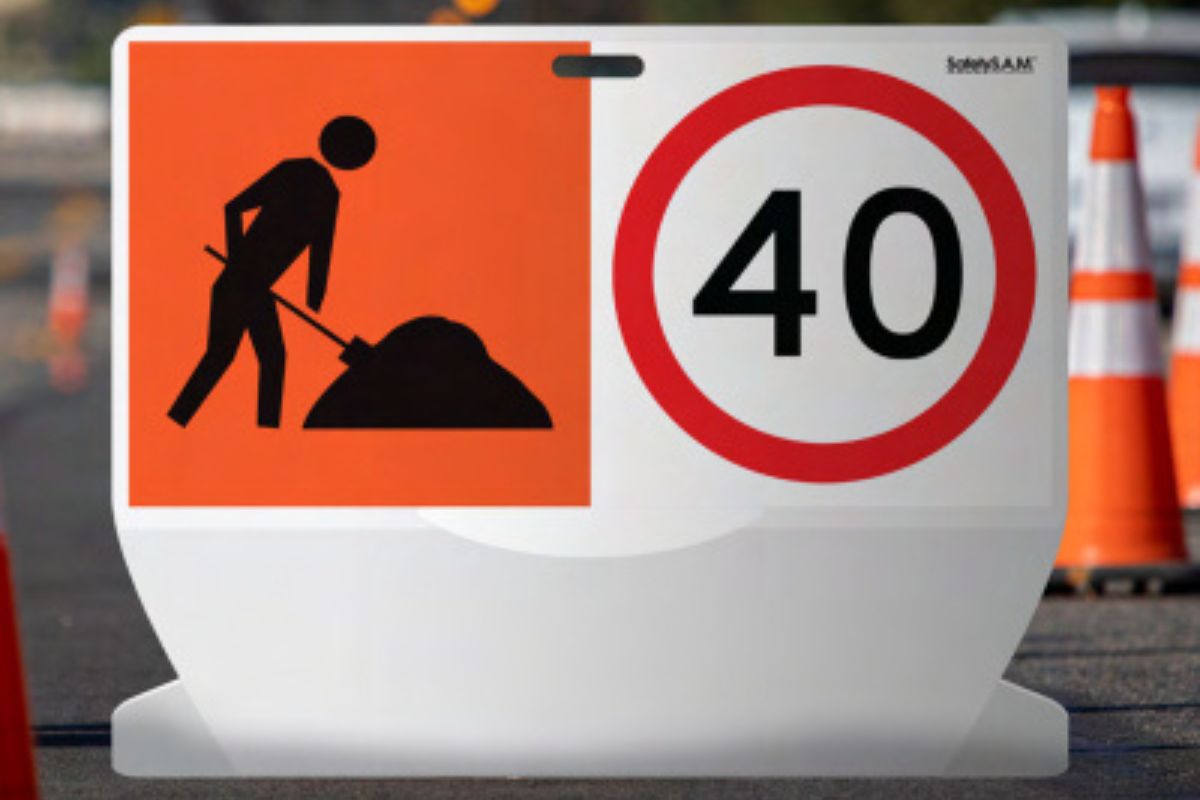
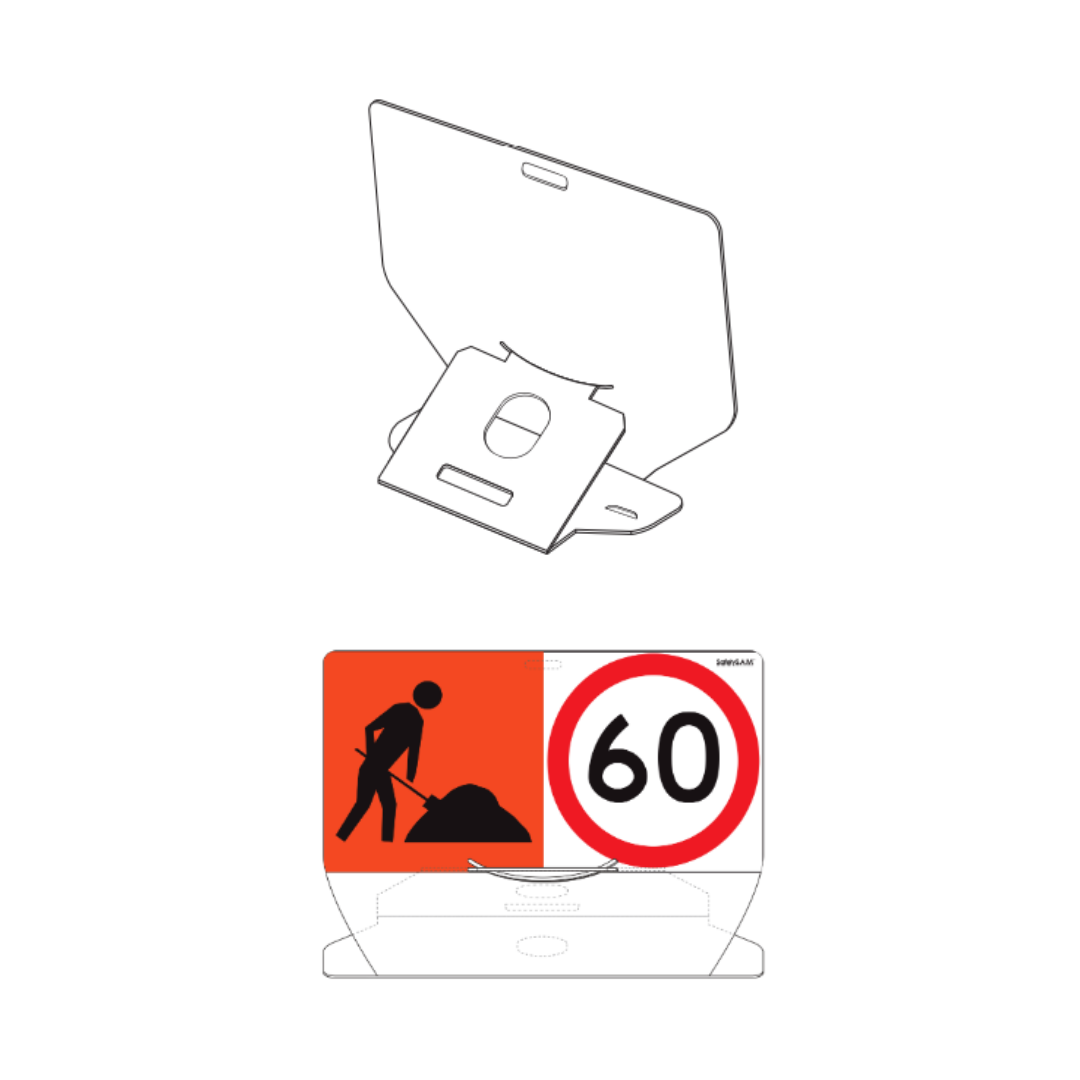
Stand alone traffic control signs are portable, self-supporting signs used to manage vehicles and pedestrians around roadworks or construction sites. Unlike traditional multi-message signs that rely on heavy steel stands, legs, or posts, these signs have a stable base that allows them to stand upright on their own.
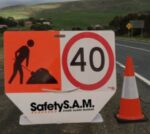
TranEx’s Safety SAM range is a leading example. Each sign is built from tough, weather-proof substrate and designed for fast, compliant setup.
There is no need for dangerous steel frames, and a standard bollard weight or small sandbag (around five kilograms) is all that is required to keep the sign secure on site. This makes stand alone signs a safer, more efficient option for short-term or mobile worksites where flexibility and compliance matter.
If you have ever wasted half your morning setting up frames or replacing damaged signs, you will know how much time a product like Safety SAM can save.
Why crews are switching to stand alone traffic control signs?
Fast and fuss free setup
With stand alone signs there is no need to bolt parts together or lug around a stack of gear. Anyone in your team can have a site ready to roll in minutes, which is ideal for maintenance crews or mobile jobs that move throughout the day.
Tough enough for Aussie conditions
Rain, dust, wind, whatever the day throws at you, Safety SAM holds up. The reflective panels stay visible in all light conditions, and the base design keeps the sign steady on uneven ground.
Good for the budget
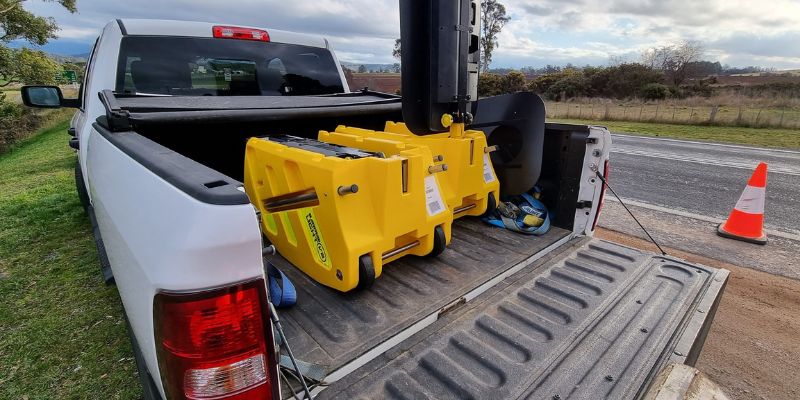
Because they are reusable and long lasting, stand alone signs pay for themselves. They reduce replacement costs and free up space in the ute or trailer. Plus, they fold flat, which reduces the number of vehicles required for transport, saving fuel costs.
When to use stand alone signage?
Stand alone signs shine when the job needs flexibility.
They are perfect for:
Short term roadworks or maintenance – quick setup, quick pack down.
Mobile works – moving along a stretch of road or between multiple sites.
Pedestrian detours and events – directing foot traffic safely.
Night works – reflective panels keep visibility high even under low light.
Tight sites – they take up less room than traditional frames or stands.
Basically, if you need reliable signage without the heavy lifting, they are a smart choice.
Need to build out a complete setup? Pair your stand alone signs with other TranEx gear like portable traffic lights, cones, or barriers to keep your site safe and compliant.
A comparison of stand alone signs vs multi message frames
Feature
Stand alone signage
Multi message frame
Setup time
Seconds
Several minutes
Tools required
None
Often needed
Weight and portability
Light and easy to move
Heavy and bulky
Durability
High for short-term use – built from weather-proof substrate
Very high – heavy steel for long-term use
Best for
Short term or mobile jobs
Long term projects
You do not have to choose one over the other. Most crews use a mix. For example, Safety SAM signs are perfect for day-to-day or moving jobs, while multi message frames handle longer term traffic setups.
Built for compliance and sustainability
Every worksite has to meet strict safety standards, and signage is no exception. All Safety SAM signs are designed to meet Australian Standard AS 1742.3 and other relevant state and national safety requirements. That means you can set them up knowing they meet council and contractor requirements across Australia.
Sustainability also plays a growing role in traffic management. Safety SAM is made from durable, long-life materials that reduce waste over time.
Because the signs are reusable, crews can rely on the same equipment job after job instead of needing replacements. Fewer replacements mean lower costs, less landfill, and a smaller environmental footprint.
The bottom line
Stand alone traffic control signs make setup quicker, keep teams safer, and help you meet compliance without the extra gear.
If you are ready to upgrade your signage, check out the fullSafety SAM range or talk to the TranEx team about the right traffic management equipment for your next project.
Council budgets are under pressure. Roadwork demands are increasing. Labour costs are rising. And communities expect roads to stay open and safe. Traditional traffic control setups require large crews, heavy equipment, and hours of setup time. Portable road safety equipment, on the other hand, offers a practical alternative: faster deployment, smaller crews, and measurable cost savings without compromising compliance.
Here’s how portable traffic control devices are helping councils across Australia reduce downtime, stretch budgets further, and keep roads safe and seen.
What is portable road safety equipment?
Portable traffic control devices are lightweight, self-contained safety systems designed for rapid deployment on Australian roads. Unlike traditional fixed installations that require multiple vehicles, heavy equipment, and extended setup times, portable devices can be transported in standard council vehicles and deployed by smaller teams.
These systems include portable traffic lights, stand-alone markers, and flexible signage that meet Australian Standards for traffic management. They’re built for quick setup, easy relocation, and reliable performance across varying road conditions.
Portable doesn’t mean temporary quality. Modern portable traffic control equipment is designed for Australian conditions with durable construction, long battery life, and compliance built in. Each device is audit-ready and meets State and National standards through formal assessment.
Types of portable traffic control devices
From quick-deploy lights to high-visibility markers and flexible signage, these portable systems give councils a smarter way to control traffic on any project.
Portable traffic lights (BarrowLIGHT)
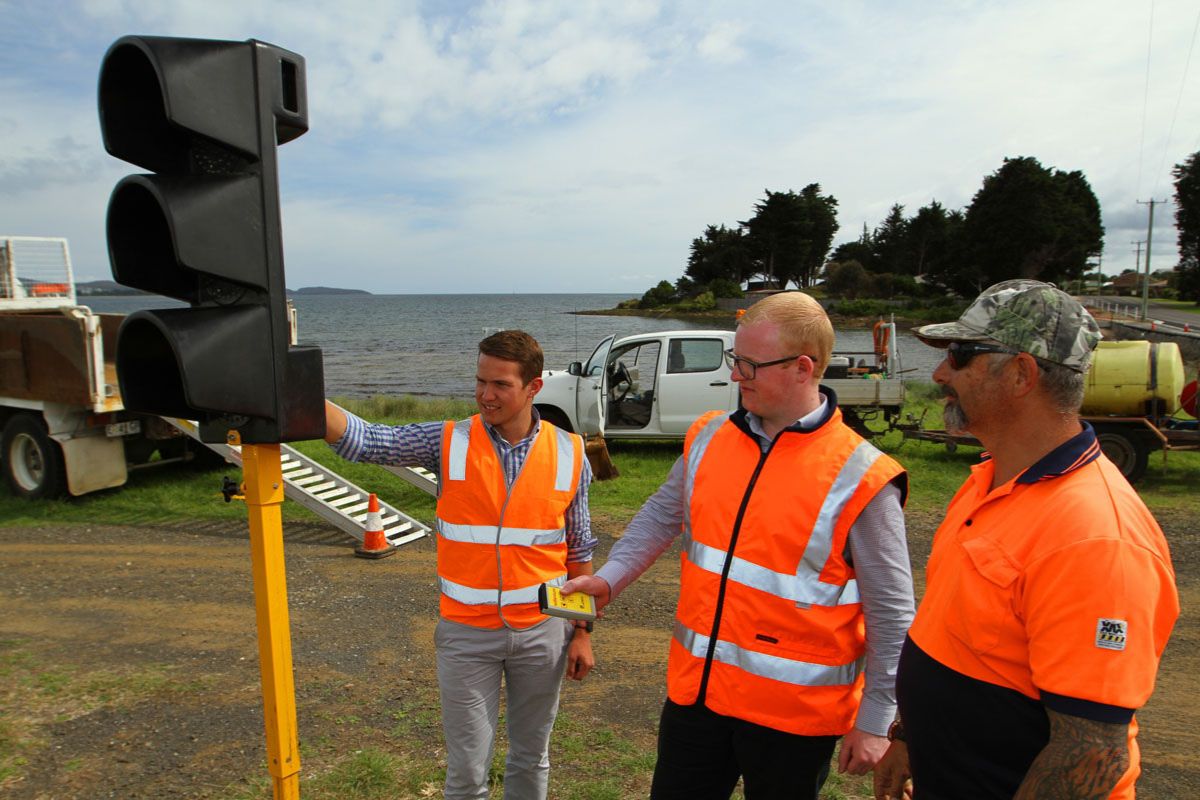
BarrowLIGHT is a self-contained traffic light system that one worker can deploy in minutes. Traditional setups can require four to six workers and can take hours, which therefore drums up costs.
Common applications of portable traffic lights:
Lane closures for resurfacing and maintenance
Intersection work and utility upgrades
Emergency road repairs
Temporary traffic management during construction
Extended battery life often eliminates the need for generators and fuel transport. Each unit is compliant with Australian Standards and delivered audit-ready.
Stand-alone markers (Safety S.A.M.)
Safety S.A.M. products manage road safety and worksite visibility on short-duration jobs. Made from a lightweight, virtually indestructible substrate, the signs fold back on themselves for instant deployment without the need for steel stands or posts.
Common applications of stand-alone markers:
Roadworks and detours
Lane closures and lateral shifts
Footpath closures and pedestrian direction
Local traffic management and speed limits
Hazard warnings such as loose gravel, water over road, rough surfaces, and cattle ahead
Reusable, easy to transport, and cost effective, Safety S.A.M. signage products help reduce compliance costs while improving on-site safety and consistency.
Guide signage systems
Guide signage provides reliable direction on roads and worksites, keeping traffic flowing smoothly and safely. Designed for compliance and visibility, these signs are built to inform motorists and pedestrians in every condition.
Common applications of guide signage:
Roadworks direction and detours
Event traffic management
Temporary road closures
Construction site navigation
Available in various sizes and formats, guide signage is built for visibility and durability. From bicycle warnings to lane closures, councils have access to compliant signage for every traffic management scenario.
Benefits of portable traffic devices
From slashing setup times to boosting safety and stretching budgets further, portable traffic devices unlock advantages that go well beyond convenience.
Time savings
Portable traffic control devices significantly reduce setup time compared to traditional setups. What once took hours now takes minutes. For councils managing multiple work sites, this time saving multiplies across every project.
Faster deployment means:
Crews arrive, set up, and start work sooner
Road closures are shorter
Projects can be scheduled more efficiently
Emergency response is faster
Reduced pack-down time is equally important. At the end of a shift or project, crews can clear sites quickly, reopening roads to traffic with minimal delay. This efficiency improves project timelines and reduces community disruption.
Cost reductions
The cost advantages of portable traffic control extend across multiple areas:
Lower labour costs per project: When a one or two-person crew replaces a six-person crew, the labour saving is immediate. Multiply this across all projects annually, and councils see substantial budget relief.
Reduced vehicle and fuel requirements: Portable equipment fits in standard council vehicles. No need for dedicated heavy equipment transport. Fewer vehicles mean lower fuel consumption, reduced maintenance costs, and smaller fleet requirements overall.
Decreased storage needs: Compact portable systems require less warehouse space than traditional equipment. Councils report storage cost reductions and better space utilisation at depot facilities.
Lower maintenance costs: Modern portable systems are designed for durability with minimal maintenance requirements. Fewer moving parts, robust construction, and self-contained power systems reduce ongoing service costs.
Example calculation of cost savings:
If a council runs 150 deployments per year and saves about $2,500 per deployment using portable solutions versus traditional methods, that’s $375,000 saved on labour alone. Add transport, storage, and maintenance savings and the total annual reduction could reach $500,000+.
Saving lives and preventing crashes
Every year, Australia records around 18 fatal, 245 serious injury and 530 minor injury crashes at temporary traffic management sites, costing $3.2 billion over 10 years, according toAustroads.
According to Austroads modelling, even modest reductions in these crashes can make significant impacts.
By shortening setup time (thus reducing crew exposure to traffic) and pairing with compliant, high-visibility signage, councils can strengthen driver awareness and reduce crash risk in and around worksites.
Operational flexibility
Portable road safety equipment gives councils the flexibility to respond to changing demands. Equipment moves easily between sites, allowing better resource allocation across council areas. A single set of portable traffic lights can serve multiple projects in a week rather than being locked to one location.
This flexibility suits various project types:
Planned roadworks that require predictable scheduling
Emergency repairs that demand immediate response
Short-duration maintenance that needs quick setup and removal
Seasonal projects that benefit from mobile equipment
Councils report improved utilisation rates for portable equipment. Rather than purchasing multiple fixed systems for different locations, one portable system serves multiple sites throughout the year.
The ability to adapt quickly to changing conditions is valuable. If weather delays a project, portable equipment moves to another site without logistical complexity. If traffic patterns change, crews can reconfigure layouts rapidly.
Community benefits
Shorter road closure times reduce community disruption. Motorists face fewer delays, businesses maintain better access, and residents experience less inconvenience from council works.
Reduced emissions result from smaller teams and fewer vehicles on-site. This aligns with council environmental goals and demonstrates a commitment to sustainable operations.
Improved public perception follows efficient roadworks. When councils complete projects quickly with minimal disruption, community feedback improves. This matters for council reputation and ongoing community relations.
Installation and setup considerations
Installing and setting up portable traffic devices isn’t just about putting equipment on the road. It’s about following an approved plan, using the right stabilisation methods, and ensuring crews are trained to deploy equipment safely and efficiently.
Follow an approved traffic guidance scheme
Every installation should begin with a traffic guidance scheme produced by a qualified traffic management designer. That scheme specifies device locations, signage spacing and distances in accordance with AS 1742.3, AGTTM and local authority requirements, helping ensure compliant and effective installation.
Site assessment and equipment selection
Selecting appropriate portable devices starts with a thorough site assessment. Consider traffic volume, road classification, work duration and environmental conditions.
High-volume roads may require full portable traffic light systems for safety and traffic flow.
Lower-volume roads might suit stand-alone markers for short-duration works.
Multi-day projects benefit from robust portable systems with extended battery life; quick repairs may only need rapid-deploy markers.
Coastal or remote locations may call for corrosion-resistant equipment or extended battery operation.
Stabilisation and mounting
All portable systems must be properly stabilised to prevent movement from wind or passing vehicles. TranEx units are supplied with secure bases, but councils can add sandbags or anchoring plates to ensure maximum stability on site.
Power source and connectivity
Before deployment, confirm the power source is fully charged or solar panels are positioned for optimal charging. Check control connectivity between devices to ensure they’re properly linked and functioning. TranEx equipment is designed for plug-and-play set-up so workers can verify status quickly.
Team training and safe deployment
Initial training for portable systems is straightforward, with most crews becoming competent in half a day. Training covers deployment, operation, pack-down, and compliance with Australian Standards and traffic management plan procedures. Even with simpler systems, crews still need to understand core traffic control principles.
Maintenance and monitoring
Regularly inspect and maintain portable traffic devices to ensure they remain in proper working condition. This includes cleaning lenses for optimal visibility, checking for damaged components and verifying control systems or timers. TranEx products are built for durability but councils should still establish a monitoring routine to address issues promptly.
Compliance and documentation
Meeting Australian Standards is non-negotiable. When portable equipment arrives certified and tested, councils can document compliance efficiently, reducing administrative burden and providing confidence during audits. TranEx supplies ISO 9001-certified products to support this process.
Logistics and planning
Efficient scheduling across multiple sites allows councils to do more with fewer units. Portable systems are light enough to be moved in standard council vehicles, eliminating the need for specialised transport. Extended battery life means equipment operates for days or weeks between charges. Inventory tracking ensures availability and improves utilisation compared to traditional gear.
Transforming roadworks with portable safety solutions
Faster deployment, smaller crews and lower costs, all with full compliance and improved safety, make portable devices the clear choice for councils.
They deliver reduced labour costs, shorter road closures, better resource allocation and stronger community relations. From portable traffic lights to stand-alone markers and flexible signage, TranEx offers practical solutions for councils across metropolitan and regional Australia.
For more than 40 years, we have supported councils nationwide with audit-ready traffic control equipment that meets State and National standards. Based in Tasmania, we deliver directly to site across the country.
Whether you’re managing planned roadworks, emergency response or short-duration maintenance, our portable road safety equipment helps you cut downtime without compromising safety or compliance.
Contact us to arrange a demonstration or discuss your council’s traffic control requirements.
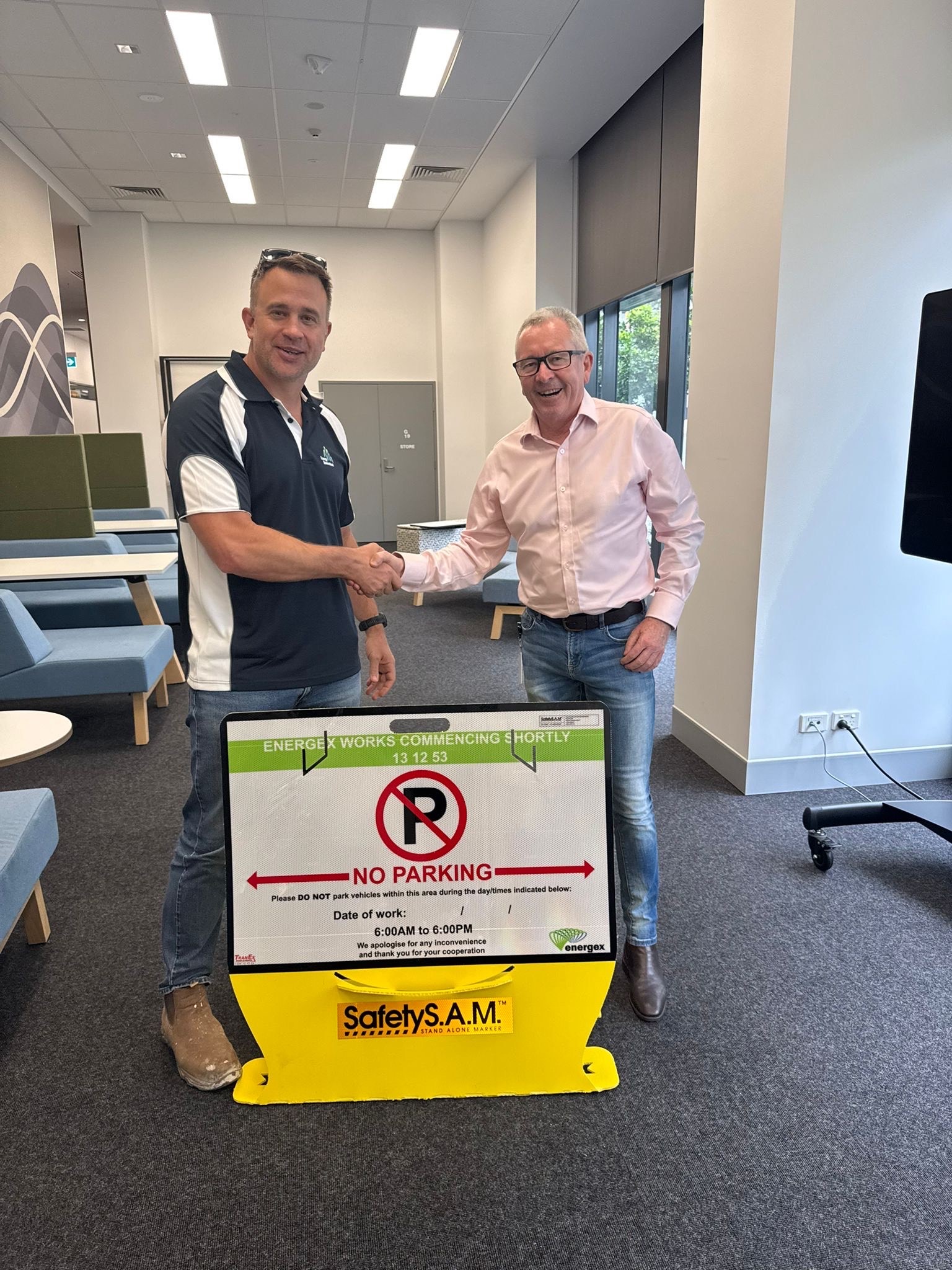
At Tranex Roads and Traffic, we are thrilled to announce that Energex, one of Australia’s leading service providers, has committed to trialing our innovative Safety SAM solution.
Designed to address the unique challenges faced by service providers in the maintenance industry, the Safety SAM is a groundbreaking tool that enhances road safety and operational efficiency, all while conserving valuable space in vehicles.
The Challenge: Limited Space, Essential Safety Signage
Service vehicles, particularly those used in traffic control and maintenance operations, often struggle with limited space. For many operators, this means sacrificing safety equipment or using bulky signage that takes up precious room. Safety SAM is specifically engineered to solve this issue by providing a compact, foldable signage solution that ensures important messages are displayed without compromising space.
What is Safety SAM?
Safety SAM (Signage and Messaging Solution) is a versatile, space-saving traffic safety tool that can be easily stored in vehicles. It allows service providers to display critical road safety messages and comply with traffic management regulations without taking up valuable storage space. When not in use, Safety SAM can be folded down, making it an ideal solution for operations where space is at a premium.
How Safety SAM Benefits Energex and the Industry
The trial with Energex is a significant step forward in enhancing road safety for maintenance and service providers. With custom in-house designs, Safety SAM offers a broad range of messaging options tailored to meet specific needs. Whether it’s a road closure, warning of hazards, or directing traffic safely around work zones, Safety SAM ensures that operators can communicate effectively, even in tight spaces.
Beyond Energex, the Safety SAM is a game-changer for various sectors including utility companies, construction sites, and municipal services. It supports compliance with traffic safety regulations and improves overall operational efficiency.
Why Choose Safety SAM?
Space-Efficient Design: Easily store and deploy in vehicles.
Versatile Messaging Options: Customisable signage to suit various traffic control needs.
Enhanced Compliance: Meet safety standards without sacrificing convenience.
Durability: Built to withstand harsh conditions, ensuring long-term reliability.
Quick Setup: Effortlessly deploy when and where needed to increase safety.
Real-World Application: How Safety SAM Enhances Road Safety
With its compact design and diverse functionality, Safety SAM enhances road safety across various industries. The solution helps reduce accidents by providing clear and visible messaging, even in challenging environments. Safety SAM can be deployed in high-risk areas such as construction zones, emergency response situations, or utility maintenance, where quick and efficient traffic control is crucial.
What Industry Experts Are Saying
Leading experts in traffic safety have praised the impact of solutions like Safety SAM. According to a recent report by the National Road Traffic Safety Council, the use of innovative, flexible safety equipment like foldable signage is a key factor in improving compliance and reducing accidents on construction and maintenance sites.
“It’s not just about visibility, it’s about creating a safer environment for workers and the public,” says John Smith, a traffic management consultant at the Australian Road Safety Forum. “Solutions like Safety SAM are critical to achieving this goal.”
Frequently Asked Questions (FAQs)
1. What makes Safety SAM different from traditional signage solutions?
Traditional traffic signage solutions can be bulky and difficult to store. Safety SAM is compact, foldable, and customisable, providing a highly efficient way to display safety messages without taking up valuable vehicle space.
2. Can Safety SAM be customised for different industries?
Yes, Safety SAM offers a wide range of messaging options and can be tailored to the specific needs of industries such as utilities, construction, and municipal services.
3. How does Safety SAM improve road safety?
By offering clear, visible, and accessible signage, Safety SAM ensures that critical safety messages are communicated effectively, reducing the risk of accidents and improving compliance with traffic management regulations.
4. Is Safety SAM durable enough for outdoor use?
Absolutely. Safety SAM is built with durability in mind, able to withstand harsh weather conditions, and is designed for long-term use in demanding environments.
5. How can I get my own Safety SAM solution?
To learn more about how Safety SAM can enhance your traffic control operations, contact us at sales@tranexgroup.com.au or call 1300 13 77 54.
Explore Related Products
For those looking to expand their traffic safety toolkit, Tranex offers a wide range of high-quality products designed to improve road safety and traffic management. Check out our traffic control equipment and road safety solutions for more information.
Conclusion
The Safety SAM solution is setting a new standard in the traffic control industry. By addressing the storage challenges faced by service providers like Energex, it ensures that essential safety messaging is always at hand. Ready to optimise your traffic management with Safety SAM? Contact Tranex today and discover how we can help you create safer, more efficient roadways.
Tranex Group is excited to announce that Fulton Hogan Signs has officially joined as our newest dealer in New Zealand.
As our third authorised dealer, Fulton Hogan will play a pivotal role in expanding Tranex’s reach in the New Zealand market, offering cutting-edge road safety solutions to enhance traffic control across the region.
Strengthening Our Partnership with Fulton Hogan
With a strong 10-year partnership, Tranex Group and Fulton Hogan Signs have built a foundation of trust and collaboration. This new dealer agreement marks a significant milestone in our relationship, as Fulton Hogan will now be providing New Zealand’s traffic control industry with access to some of Tranex’s most innovative products.
Key products include the Barrowlight V2 portable traffic lights and the versatile SafetySAM stand-alone marker, both of which have been designed to improve road safety for both workers and road users.
Conrad Andrews, Tranex Manager, expressed his enthusiasm about this strengthened partnership, stating,
“We are excited to have Fulton Hogan Signs come on board as an authorized dealer because they share our commitment to the safety of road users and road crews. Keeping them seen and safe, and making sure everyone gets home safely, is our common purpose.”
Why Fulton Hogan? A Trusted Partner in Infrastructure
Fulton Hogan, a family-owned business with over 90 years of experience, operates across a broad range of infrastructure, construction, and civil engineering services. From roads and bridges to airports, ports, and energy resources, Fulton Hogan has an extensive footprint in both New Zealand and Australia. Their expertise aligns perfectly with Tranex’s mission to improve road safety through innovative solutions.
Fulton Hogan’s deep understanding of the infrastructure landscape and their commitment to community welfare makes them the ideal partner to introduce Tranex’s high-performance products to New Zealand. By combining their local expertise with Tranex’s state-of-the-art traffic safety technologies, this partnership promises to create safer, more efficient roadways for all.
Tranex’s Road Safety Products Now Available in New Zealand
With the addition of Fulton Hogan to our dealer network, Tranex’s revolutionary road safety solutions are now more accessible to the New Zealand market. Our flagship products include:
Barrowlight V2 Portable Traffic Lights: These robust, easy-to-deploy traffic lights are designed for use in temporary traffic control settings, offering reliability, flexibility, and enhanced safety.
SafetySAM Stand-Alone Marker: This innovative, space-saving solution ensures clear, visible road safety messages are displayed, even in the tightest of spaces. Perfect for use on service vehicles and maintenance crews, SafetySAM is designed to keep both road crews and motorists safe.
By expanding our dealer network in New Zealand, we are reinforcing our mission to provide high-quality road safety products to support traffic control operations nationwide.
What This Partnership Means for Road Safety
The partnership between Tranex Group and Fulton Hogan is not just about business growth—it’s about enhancing the safety of road users and construction crews. Together, we are committed to promoting safe working environments for traffic control personnel while ensuring that drivers can navigate New Zealand’s roadways with confidence.
As both organisations continue to prioritise safety, our partnership is a testament to the shared goal of improving road safety through innovative solutions.
Frequently Asked Questions (FAQs)
1. What products does Fulton Hogan offer in New Zealand?
Fulton Hogan will offer Tranex’s full range of traffic safety solutions, including the Barrowlight V2 portable traffic lights and the SafetySAM stand-alone marker, which are designed to improve traffic control and road safety.
2. How does the Barrowlight V2 improve road safety?
The Barrowlight V2 is a portable and efficient solution for temporary traffic management. It provides bright, visible traffic signals to alert drivers and ensure smooth, safe traffic flow at construction and maintenance sites.
3. What makes the SafetySAM stand-alone marker unique? SafetySAM is a foldable and space-efficient road safety tool that ensures important safety messages are visible even in limited space environments. Its versatility makes it ideal for road maintenance vehicles and service providers.
4. How can I purchase Tranex products in New Zealand?
You can now purchase Tranex products directly through Fulton Hogan Signs, our authorised dealer in New Zealand. Visit their website or contact them for more details on pricing and availability.
5. How does this partnership benefit New Zealand’s road safety?
By expanding our dealer network and introducing Tranex’s innovative products into New Zealand, this partnership will enhance road safety across the country. The Barrowlight V2 and SafetySAM will improve traffic management and help protect both workers and motorists.
Explore Related Products from Tranex
Tranex offers a comprehensive range of road safety solutions to meet the needs of traffic control professionals. To learn more about our products, check out our traffic control equipment and road safety solutions pages.
Conclusion: A Commitment to Road Safety
The partnership between Tranex Group and Fulton Hogan Signs is a significant step in our continued mission to improve road safety in New Zealand. Together, we will provide traffic control professionals with access to innovative, reliable products that help keep everyone safe on the road. As we work together to make roads safer, we look forward to seeing the positive impact this collaboration will have on New Zealand’s roadways.
ABOUT US
Our genuine desire to keep people seen and safe, while enabling our clients’ businesses to grow, informs everything we do. We are a leader in traffic management solutions with over 40 years’ road and civil industry experience. With Tranex you have a reliable partner in ensuring optimal safety and project success.
Our Purpose: To Keep Roads seen and safe for those that work on them and use them.
Our Signs don't just work - they work for everyone.

 Planning ahead for bad weather
 Staying seen and safe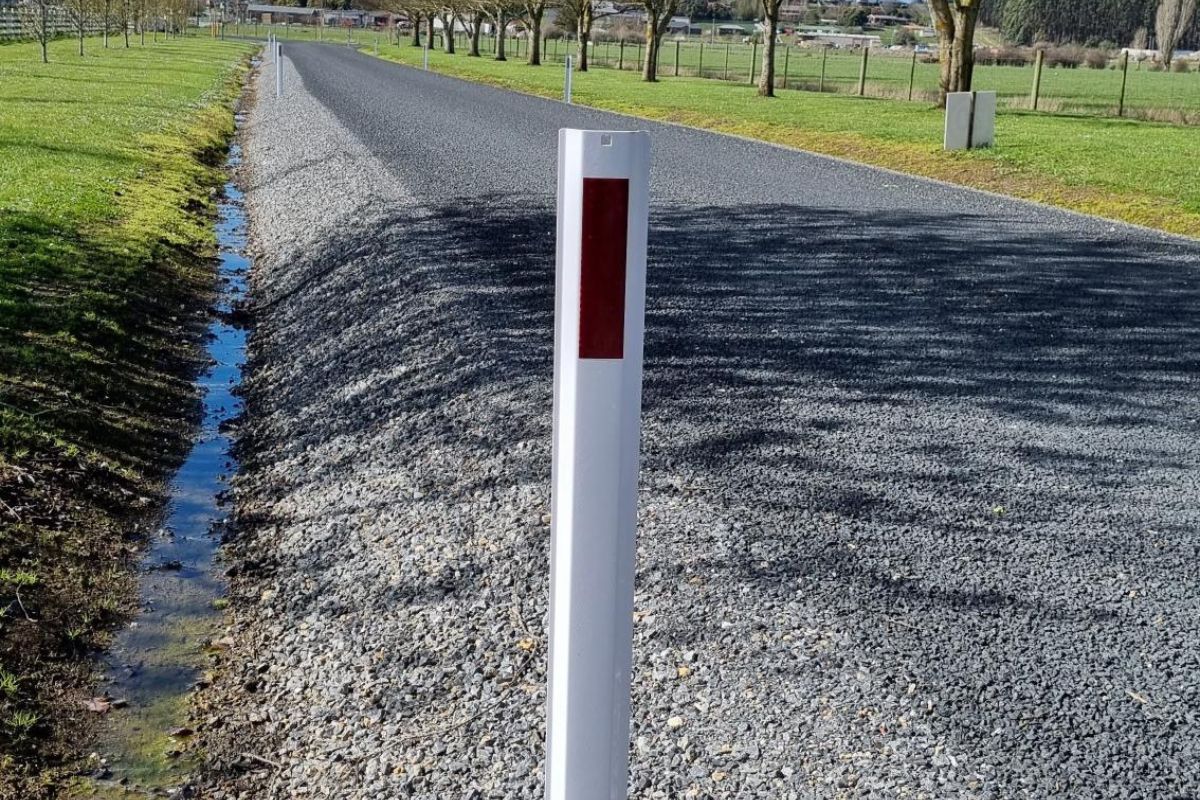

 Final thoughts
 What are stand alone traffic control signs?